The Quiet Mechanics of Support Scripts Guiding Bonus Stacking Across Live Tables and Accumulating Event Markets
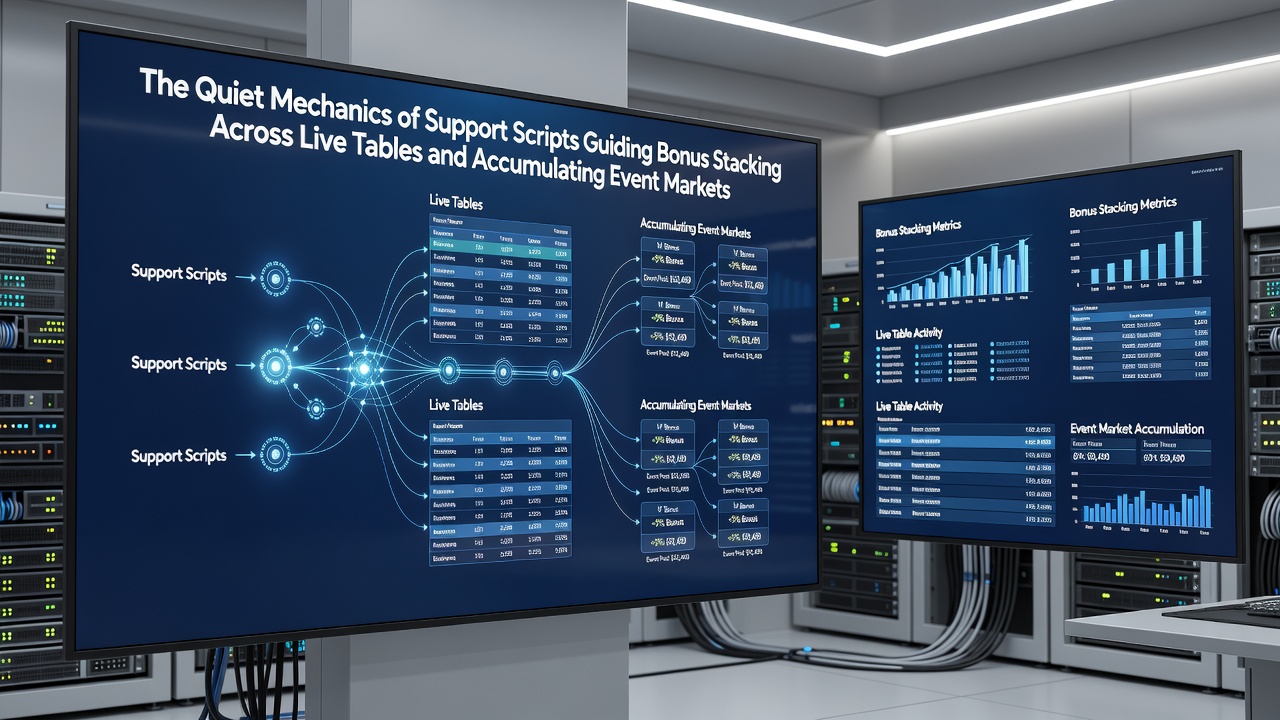
Support scripts operate as backend logic layers that process eligibility checks, wager requirements, and stacking rules before any player funds interact with live dealer interfaces or event-based accumulators. These scripts pull data from player accounts, game servers, and market feeds in real time, applying conditional filters that determine whether multiple bonuses can combine without violating platform limits.
Core Functions of Support Scripts in Gaming Platforms
Developers design these scripts to handle sequential validation steps that begin with deposit confirmation and extend through active gameplay sessions. A typical script evaluates deposit source, bonus type, game category, and current balance thresholds in a single query cycle, then routes the outcome to the front-end display. Data from industry reports shows that platforms using automated scripts reduce manual review times by up to 70 percent compared with earlier manual approval processes.
Live table environments present specific challenges because each hand or spin generates new outcome data that must feed back into the script engine. Scripts monitor table minimums, side-bet participation, and progressive contributions simultaneously, ensuring that stacked bonuses remain within permitted multipliers. When a player places a wager on a blackjack table that also qualifies for a reload bonus, the script cross-references the wager amount against remaining rollover obligations before authorizing the combined credit.
Bonus Stacking Mechanics Across Live Dealer Sessions
Stacking occurs when a player activates multiple promotional credits on the same table session, and scripts enforce strict ordering rules to prevent overlap that could exceed house limits. For instance, a welcome bonus might apply first to initial table wagers, while a cashback promotion activates only after the first bonus reaches full clearance. Observers note that these ordering protocols rely on timestamp synchronization between the live dealer feed and the bonus ledger, which updates every few seconds during active play.
Figures from regulatory filings indicate that platforms in regulated markets such as those overseen by the Nevada Gaming Control Board maintain audit trails of every script decision for at least 90 days. This record-keeping allows examiners to reconstruct how a particular stack of bonuses interacted with a sequence of live table outcomes.
Integration with Accumulating Event Markets
Event markets, including accumulators on sports or competitive fixtures, introduce additional variables such as odds movement and settlement timing. Scripts must pause or adjust bonus application when an accumulator leg settles outside expected windows, particularly during high-volume periods like major tournament weekends. In July 2026, several platforms adjusted their accumulator scripts ahead of international football competitions to accommodate real-time odds feeds from multiple providers.
Research published by the University of Nevada, Las Vegas International Gaming Institute demonstrates that script-driven stacking in combined table and event markets correlates with higher player session duration when clearance conditions remain transparent. The study examined transaction logs across multiple jurisdictions and found that automated eligibility checks reduced disputes related to bonus expiration by 42 percent over a 12-month period.
Technical Architecture and Data Flow
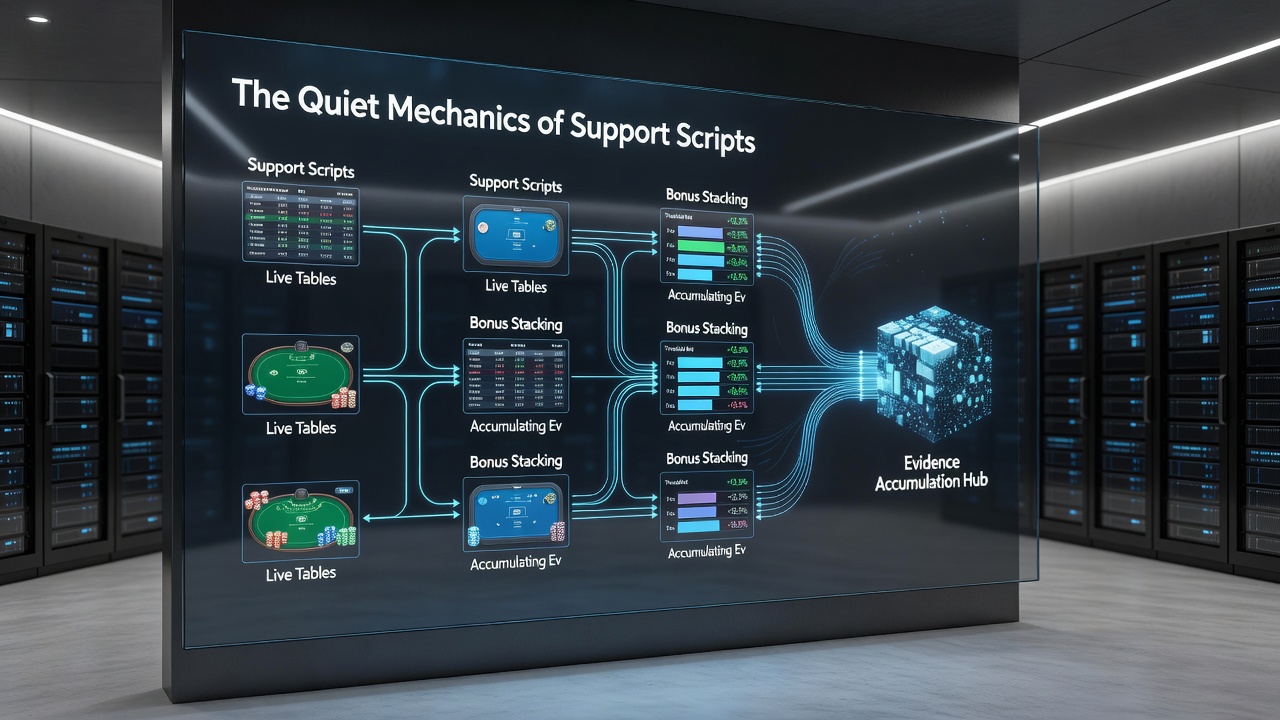
Modern implementations separate the script engine into modular components that communicate through APIs with live dealer software and sports data providers. One module handles wager validation, another tracks cumulative rollover progress, and a third manages market-specific restrictions such as voided legs in accumulators. When these modules exchange data, the central controller script applies final approval or rejection within milliseconds, minimizing latency visible to the player.
Platforms that operate across multiple regions often maintain separate script instances tuned to local regulatory requirements. For example, scripts serving Australian markets incorporate additional responsible gambling checks that do not appear in versions used in European jurisdictions, yet both versions share the same core stacking logic for live tables and accumulators.
Conclusion
Support scripts form the invisible infrastructure that enables consistent bonus application across live dealer tables and accumulating event markets. Their design emphasizes real-time validation, regulatory compliance, and integration with diverse data feeds, allowing platforms to manage complex stacking rules without manual intervention. As markets continue to expand in July 2026 and beyond, these scripts remain central to maintaining operational integrity across table and event products.