Tracing Bonus Lifecycles from Initial Claim to Final Payout Across Digital Reel Systems, Simulated Card Tables, and Live Match Predictions
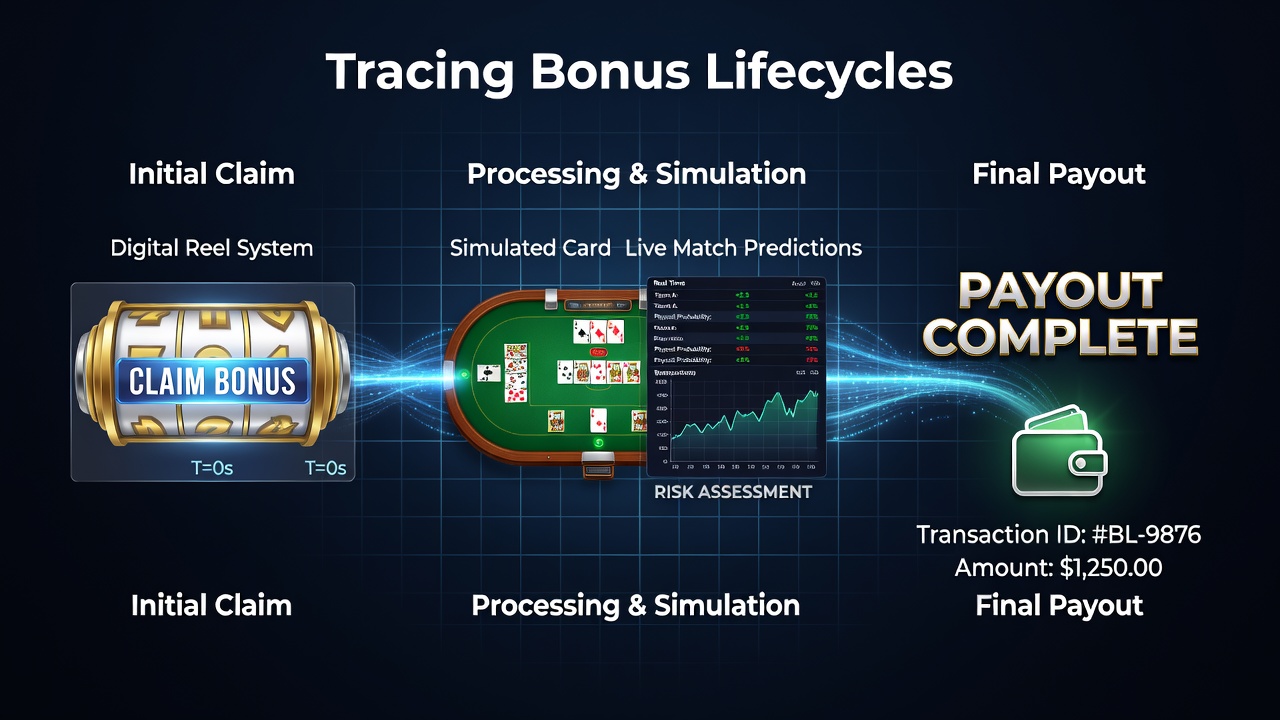
Bonus structures in digital gaming environments follow defined sequences that begin with a player activating an offer adn end with funds reaching an account after all conditions clear. These sequences operate differently depending on whether the activity centers on spinning reels, simulated card play, or predictions tied to ongoing athletic events, yet each path incorporates claim initiation, requirement fulfillment, compliance checks, and disbursement mechanics.
Initial Claim and Activation Mechanics
Players trigger bonuses through account dashboards or promotional banners that link directly to terms outlining wagering multiples, eligible game categories, and time windows for completion. Systems record the activation timestamp automatically, which then governs how long the offer remains valid before expiration. Data compiled by the American Gaming Association shows that operators processed millions of such activations monthly during the first half of 2026, with digital reel promotions accounting for the largest share because they require fewer game-type restrictions than table or prediction offers.
Once claimed, the bonus balance appears in a separate wallet that interacts with the main balance according to preset rules. This separation prevents accidental mixing during play and allows platforms to track progress toward wagering targets in real time. Operators update these tracking systems nightly, feeding results into player-facing progress bars that display remaining requirements.
Progression Through Digital Reel Systems
Reel-based games apply bonus funds at a standard contribution rate, often 100 percent toward wagering totals, although some titles carry lower percentages when they feature elevated return-to-player settings. The lifecycle advances each spin as the platform subtracts or adds to the required total based on bet size and outcome. Because reels generate high volumes of individual rounds, completion tends to occur faster here than in slower-paced environments, yet volatility can stretch or compress the timeline depending on session length and stake levels.

Handling Within Simulated Card Tables
Simulated card environments impose stricter contribution caps, frequently limiting blackjack or roulette wagers to 20 percent or less of the total requirement. This adjustment reflects the lower house edge and slower decision rate typical of table simulations. Players therefore complete the lifecycle only after accumulating a higher volume of hands or spins compared with reel play, and systems flag any table-specific bonuses that exclude side bets or particular rule variants. Research published through the University of Nevada, Las Vegas gaming studies program indicates that table-focused bonuses maintain higher average completion times, partly because participants adjust strategy mid-session and partly because platforms enforce tighter audit trails on these lower-margin games.
Integration With Live Match Predictions
Prediction markets tied to athletic events allow bonus funds to apply toward in-play wagers once the offer activates, yet settlement occurs only after the underlying event concludes and results post. The lifecycle here stretches across variable durations, from minutes in fast-moving contests to hours or days in longer formats. Operators link these bonuses to real-time data feeds so that partial progress updates appear even while events remain open, and any cash-out or partial settlement functions respect the original wagering multiple. As of July 2026 several major platforms expanded their prediction catalogs to include additional leagues, which increased the number of simultaneous bonus lifecycles operators must monitor across time zones.
Verification, Compliance, and Final Payout
Throughout each stage, automated systems cross-reference identity documents, transaction histories, and play patterns against regulatory thresholds. When requirements reach completion the platform initiates a review window, typically lasting between 24 and 72 hours, during which security teams confirm no rule violations occurred. Successful verification moves the converted funds into the withdrawable balance, while flagged accounts enter manual review that can extend the timeline further. Figures released by the Nevada Gaming Control Board document steady growth in processed bonus conversions through the first two quarters of 2026, reflecting both expanded player bases and refined backend tooling that reduces manual intervention rates.
Conclusion
Bonus lifecycles across reels, tables, and predictions share core stages yet diverge in pacing, contribution rules, and settlement triggers. Operators continue to refine tracking interfaces and compliance layers to accommodate rising volumes, while regulatory bodies maintain oversight that shapes how quickly funds move from claim to payout. The result is a structured process that balances player access with operational safeguards across all three gaming formats.